










Zimbabwe is turning to locally collected data to identify challenges facing businesses and guide policies aimed at improving productivity, investment and economic growth.
The country’s first National Competitiveness Baseline Survey is expected to help the government assess the business environment, identify areas needing improvement and measure whether economic reforms are producing results.
Speaking at the dissemination of the 2025 survey findings in Harare on Wednesday, Chief Director Industry in the Ministry of Industry and Commerce, Florence Makombe said the findings should guide government spending and policy decisions.
“The importance of this Survey lies less in any single score and more in the baseline it establishes. It tells us where enterprises perceive progress, where constraints remain, and where Government, industry and other partners should direct their respective attention,” he said.
Makombe said the findings should help the Government assess whether reforms were improving productivity, investment, infrastructure, access to finance and the ease of doing business.
“Budget priorities should respond to evidence on the most binding competitiveness constraints,” he said.
The survey comes as Zimbabwe implements the National Development Strategy 2 (NDS 2) and the Zimbabwe National Industrial Development Policy 2 (ZNIDP 2), both covering the 2026–2030 period.
Makombe said local companies needed to compete on cost, quality, reliability and delivery to benefit from regional and international markets.
“Our ability to benefit will depend on whether Zimbabwean goods and services can compete on cost, quality, reliability, standards and delivery,” he said, referring to opportunities under the African Continental Free Trade Area.

Zimbabwe National Statistics Agency director-general Tafadzwa Bandama said the survey provided a starting point for understanding the factors affecting business performance and determining where interventions were needed.
“As a baseline, it also provides a reference point against which progress will be measured and tracked during NDS2, where effective monitoring and evaluation are essential,” she said.
Bandama urged policymakers, businesses, development partners and researchers to examine the findings and use them to guide decisions.
“However, these statistics will only acquire value when they are understood, utilized and translated into action,” she said.
Related Stories

National Competitiveness Commission acting executive director Brighton Shayanewako said the survey was designed to address the limitations of relying heavily on international competitiveness rankings, which may not fully reflect Zimbabwe’s local business conditions.
“Such indices remain useful for cross-country comparison, but they do not always capture the country’s specific structural, institutional, provincial and sectoral circumstances,” he said.
Shayanewako said the survey provided a common reference point for the Government, businesses, labour, academia and development partners to understand the conditions affecting enterprise performance.
He said it should be treated as the beginning of a continuing process rather than a once-off report.
“A baseline is valuable because it enables future assessments to determine whether the operating environment is improving and whether reforms and investments are producing the intended results,” he said.
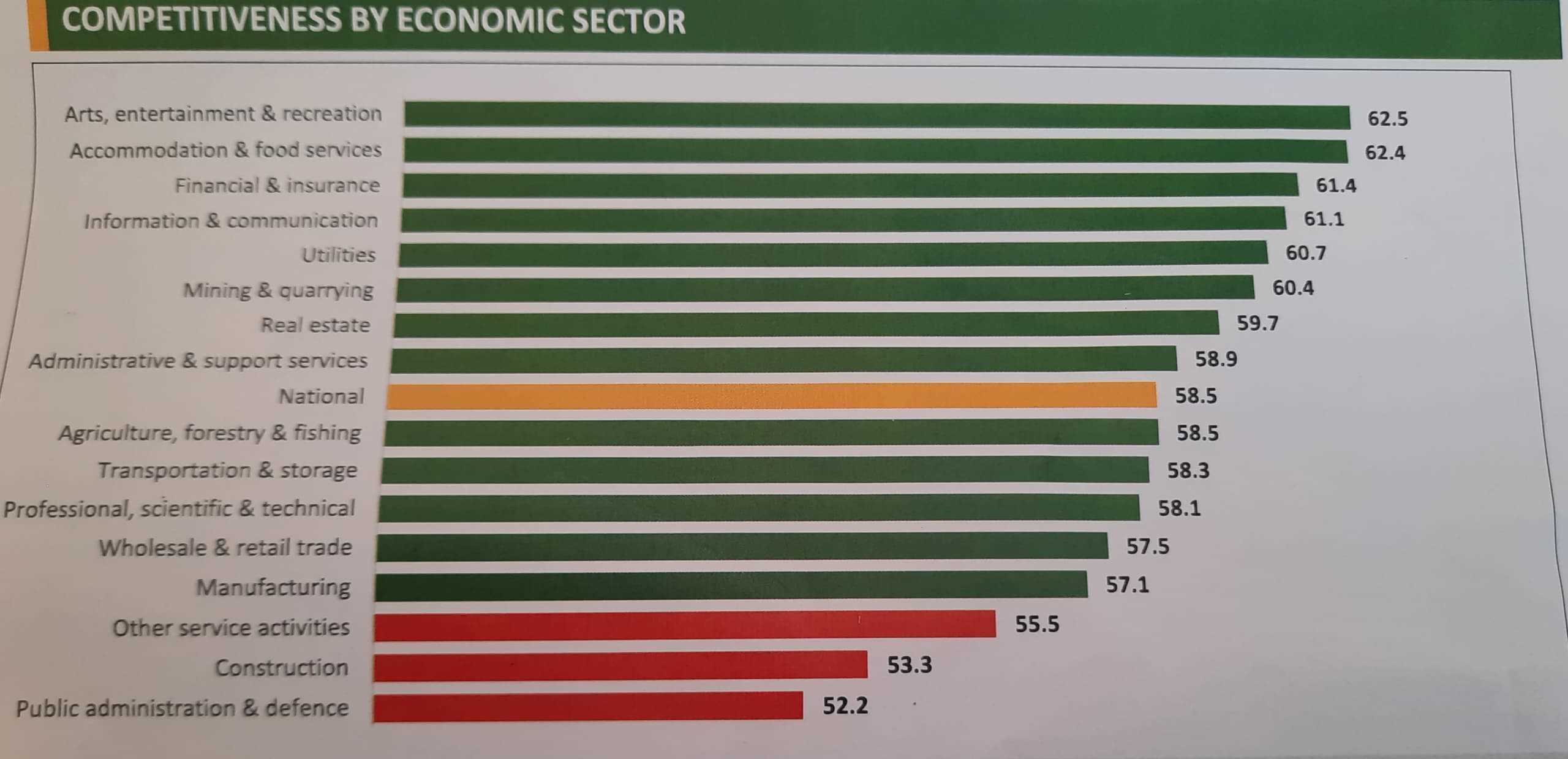
The survey assesses competitiveness through four areas: innovativeness, inclusiveness, sustainability and resilience. It also recognises differences across provinces and economic sectors.
Shayanewako said the commission would work with ZIMSTAT and other institutions to support regular measurement and promote the use of the findings in policy analysis and performance monitoring.
He said improving competitiveness required cooperation among government institutions, businesses, researchers and other stakeholders.
Makombe also called for the development of a national competitiveness dashboard to track priority indicators, targets and the institutions responsible for delivering results.
The survey was conducted through a partnership between the National Competitiveness Commission and ZIMSTAT, with support from government institutions, development partners and businesses that provided information.
Shayanewako said the findings would be useful only if stakeholders acted on the evidence and continued measuring progress.
The long-term goal is to build a more productive and competitive economy that attracts investment, expands exports, creates jobs and improves people's livelihoods.








Leave Comments